PART OF THE FOUNDATIONAL BUSINESS SERVICES NETWORK
FBS Audits
Understand Before You Invest.
FBS Audits helps businesses investigate performance challenges before committing time, effort, and capital to a solution. We use structured diagnostics to identify hidden constraints, measure their impact, and provide evidence-based direction for what should happen next.Not every business problem needs another tool, employee, process, or marketing campaign. Start by understanding what is actually restricting performance.
WHY DIAGNOSTICS MATTER
Understand why solving symptoms before identifying the underlying constraint can waste time, effort, and capital.
EXPLORE THE COST OF ASSUMPTIONS ↓


WHAT CAN BE INVESTIGATED?
Explore the digital, operational, visibility, and growth constraints that may be limiting business performance.
EXPLORE DIAGNOSTIC CATEGORIES↓
HOW DOES THE PROCESS WORK?
See how discovery, investigation, evidence, analysis, and findings turn uncertainty into a clearer path forward.REVIEW A DIAGNOSTIC CONSULTATION ↓


READY TO START WITH EVIDENCE?
Share the symptoms, concerns, or business challenges you are experiencing and determine where investigation should begin.
REQUEST A DIAGNOSTIC REVIEW ↓
Explore the diagnostic framework ↓
©2026 Foundational Business Services & Green Guild Holdings LLC. All rights reserved.
PART OF THE FOUNDATIONAL BUSINESS SERVICES NETWORK
Find The Constraint Before You Fund The Solution.
EVIDENCE BEFORE ACTION
Businesses frequently invest in solutions before identifying the problem (putting the cart before the horse). New software, additional marketing, operational changes, and expensive projects often fail to deliver results because the underlying constraint was never diagnosed. Our investigation frameworks help identify what is actually slowing growth before additional capital is committed.
THE COST OF ASSUMPTIONS
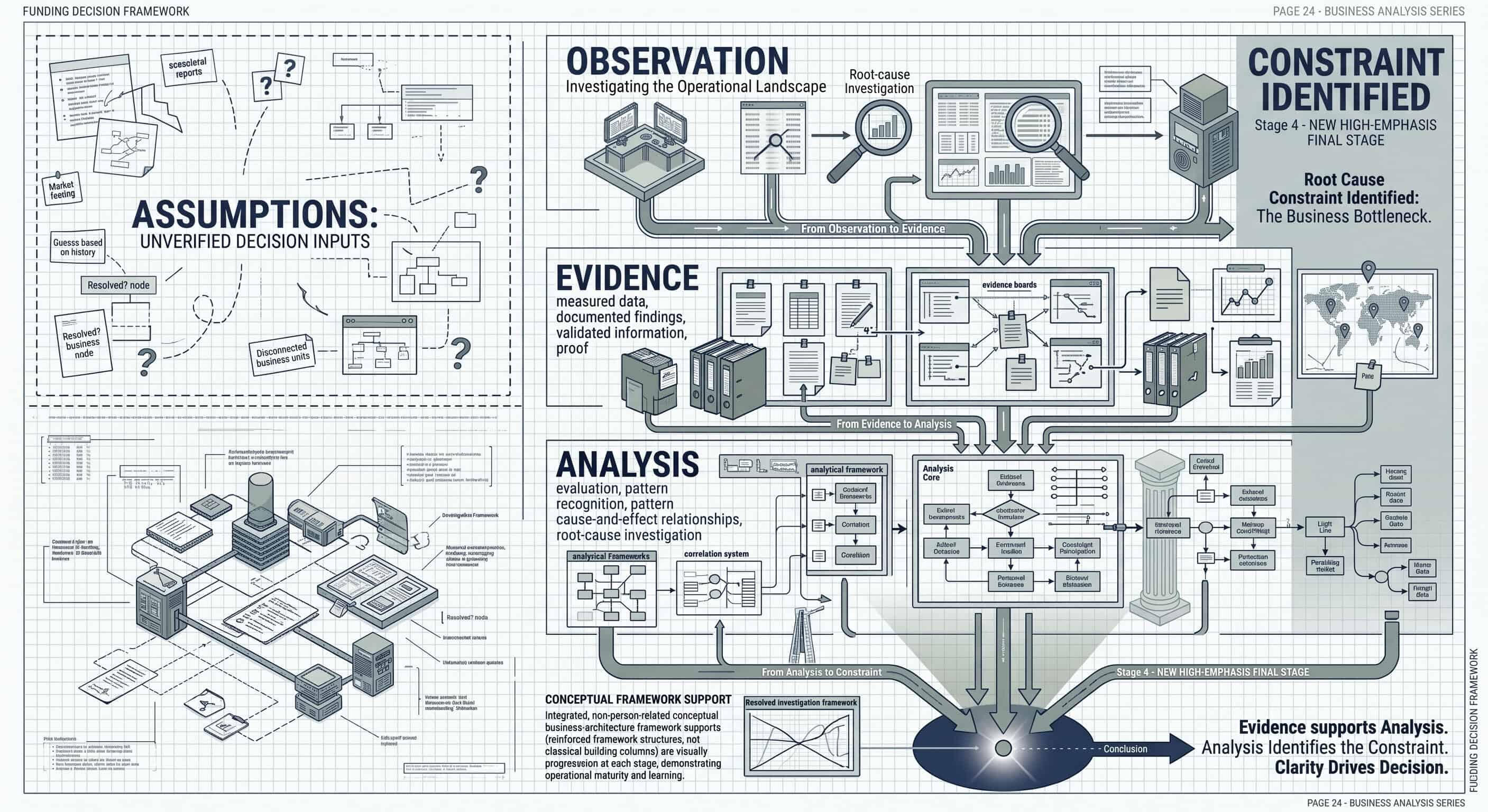
Evidence Is Cheaper Than Guessing.
Business owners make decisions every day based on incomplete information. New software is purchased, marketing budgets are increased, processes are redesigned, and systems are replaced. Unfortunately, when the underlying constraint is not properly identified, even expensive solutions often fail to produce meaningful improvements.
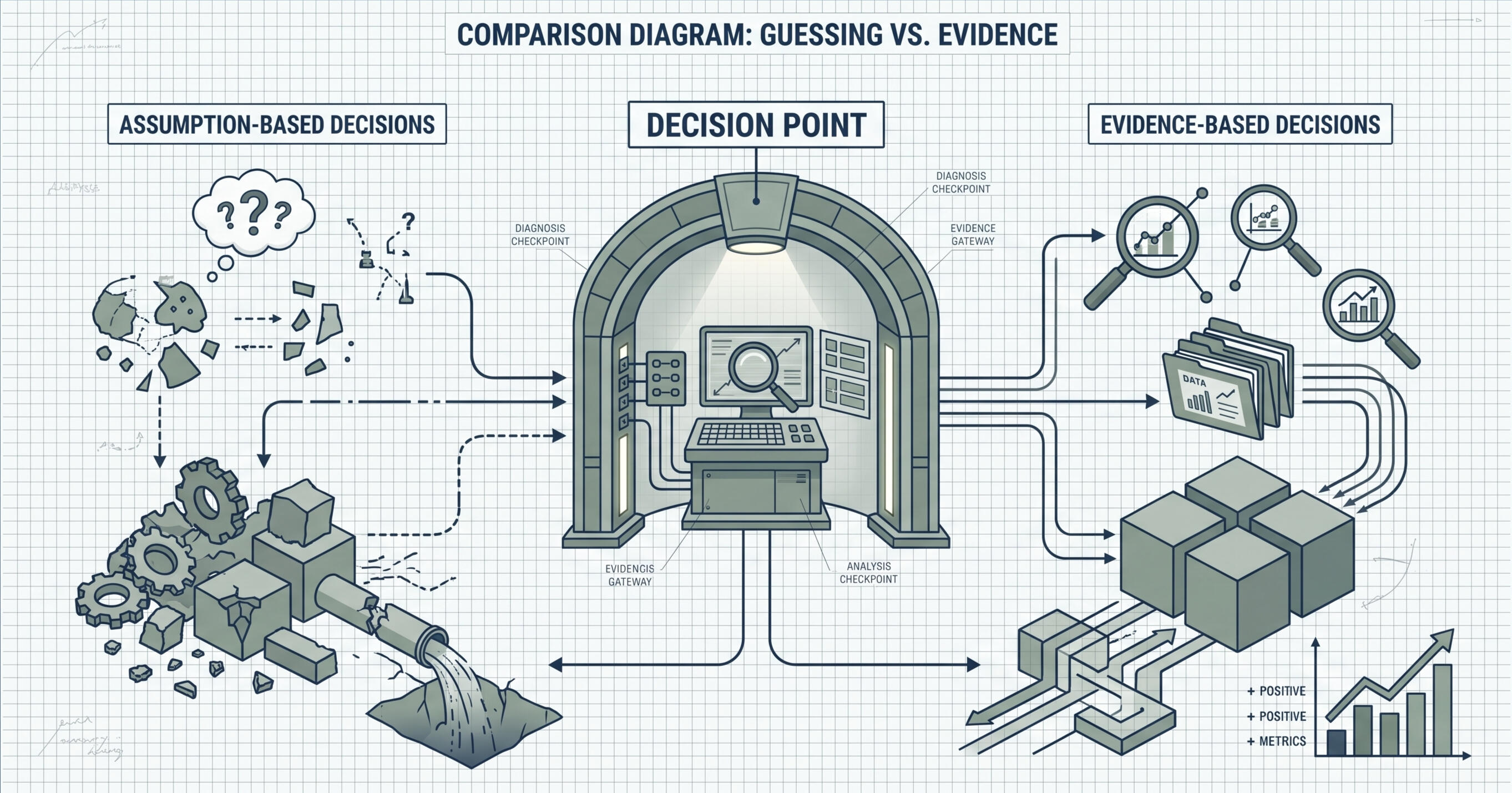
ASSUMPTION-BASED DECISIONS
Reacting Without Evidence
Assumptions often focus attention on visible symptoms instead of underlying causes. Teams invest time, money, and effort solving the wrong problem while the actual constraint remains untouched.
• Solution selected before diagnosis• Resources deployed to the wrong priority• Repeated problems despite corrective action• Wasted effort and avoidable expenses
EVIDENCE-BASED DECISIONS
Investigate Before Investing
Investigation provides clarity. By identifying the actual constraint, resources can be directed toward the areas that will produce the greatest operational and financial impact.
• Root causes identified before action• Resources aligned with measurable priorities• Recommendations supported by evidence• Faster progress with less wasted effort
The difference between wasted investment and measurable improvement is often the quality of the diagnosis. Before implementing a solution, make sure you understand the constraint creating the problem.
EVIDENCE & INVESTIGATION
Hidden Constraints Create Visible Problems.
Many business challenges appear obvious on the surface. Declining conversions, inconsistent growth, operational delays, and underperforming campaigns often seem like isolated problems. In reality, these symptoms are frequently caused by hidden constraints that compound over time. Effective investigation focuses on identifying the source rather than reacting to the symptom.
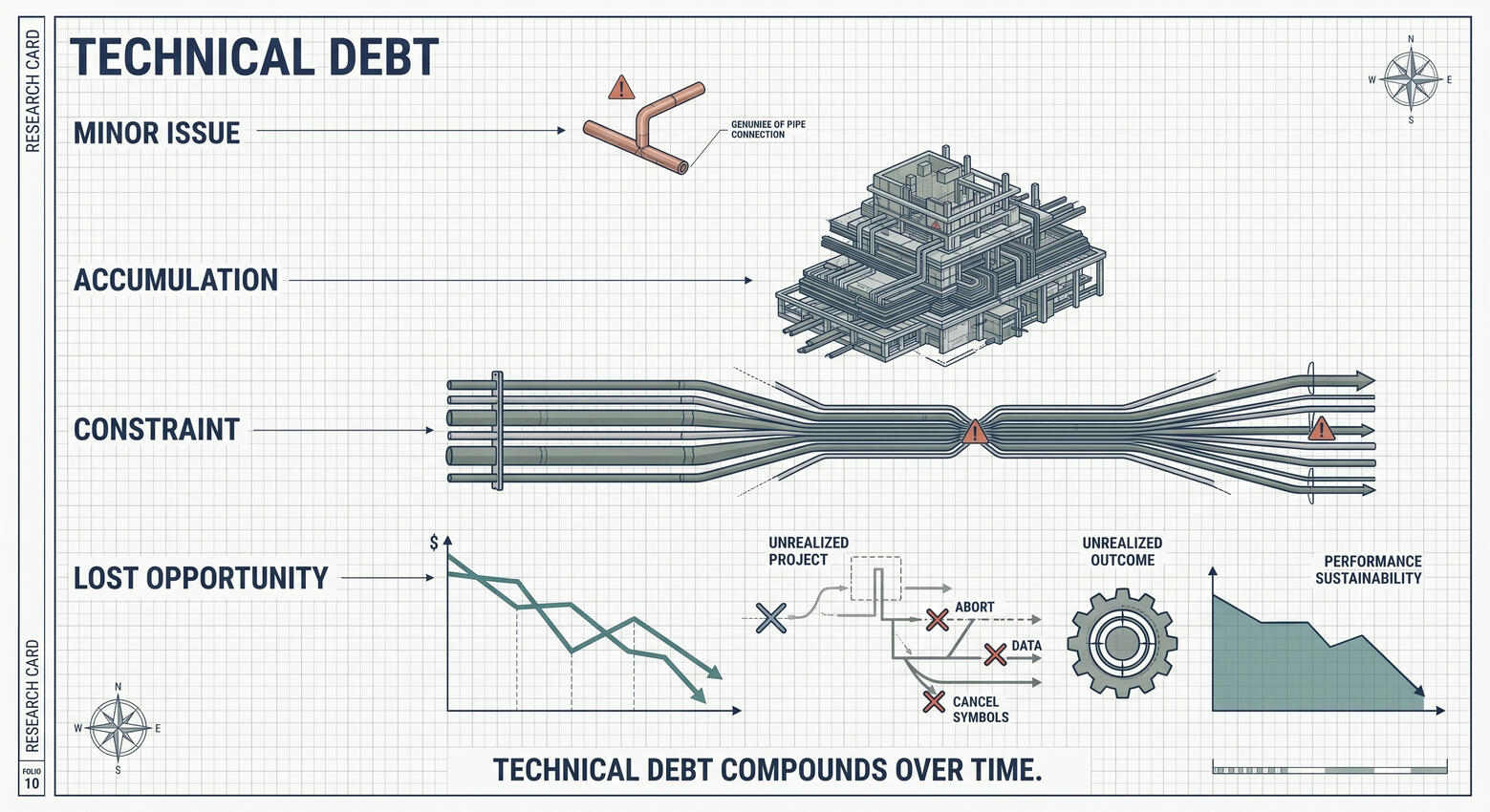
Technical Debt
Reacting Without Evidence
Hidden technical issues rarely remain isolated. Small inefficiencies accumulate over time, reducing performance, creating friction, and increasing operational costs long before they become visible problems.
Minor issues can create major constraints when left unresolved.
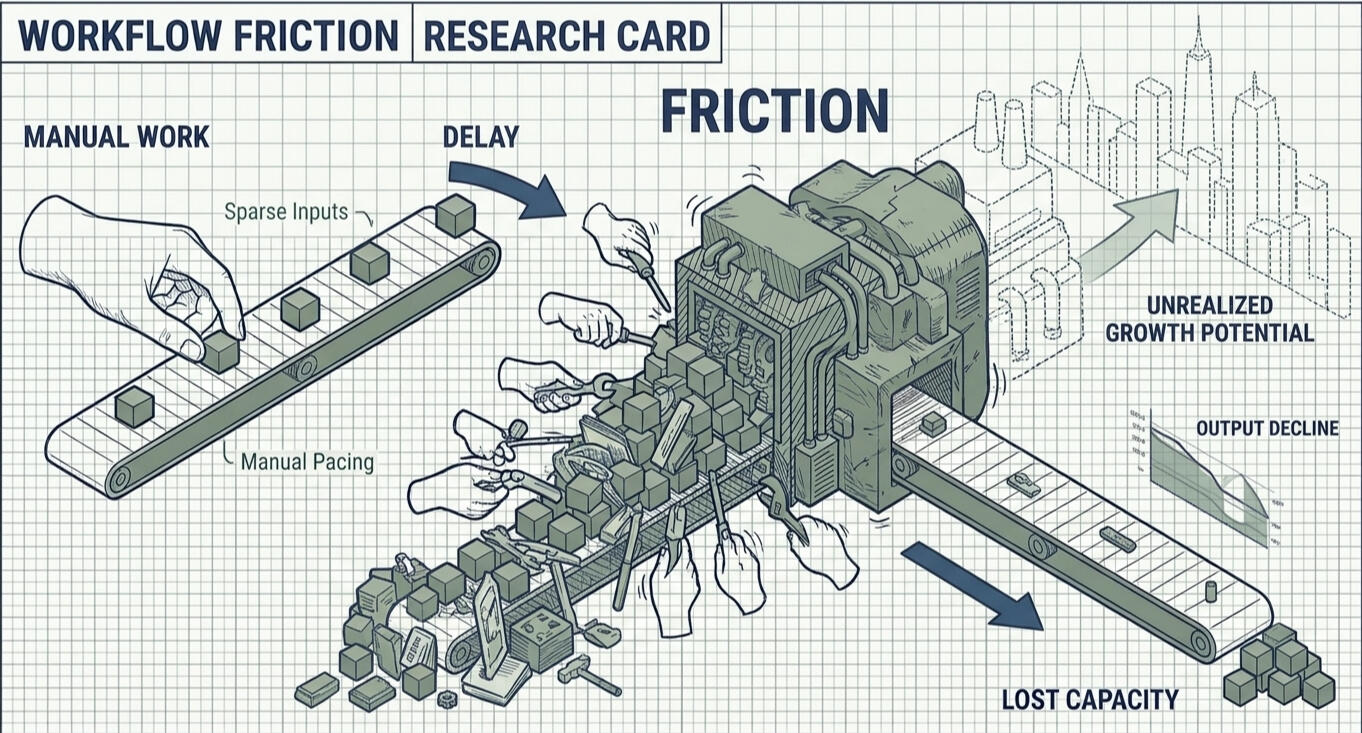
Workflow Friction
Many organizations lose capacity through unnecessary steps, inconsistent processes, and manual handoffs. Small inefficiencies repeated hundreds of times often create significant operational bottlenecks.
Operational friction compounds faster than most businesses realize.
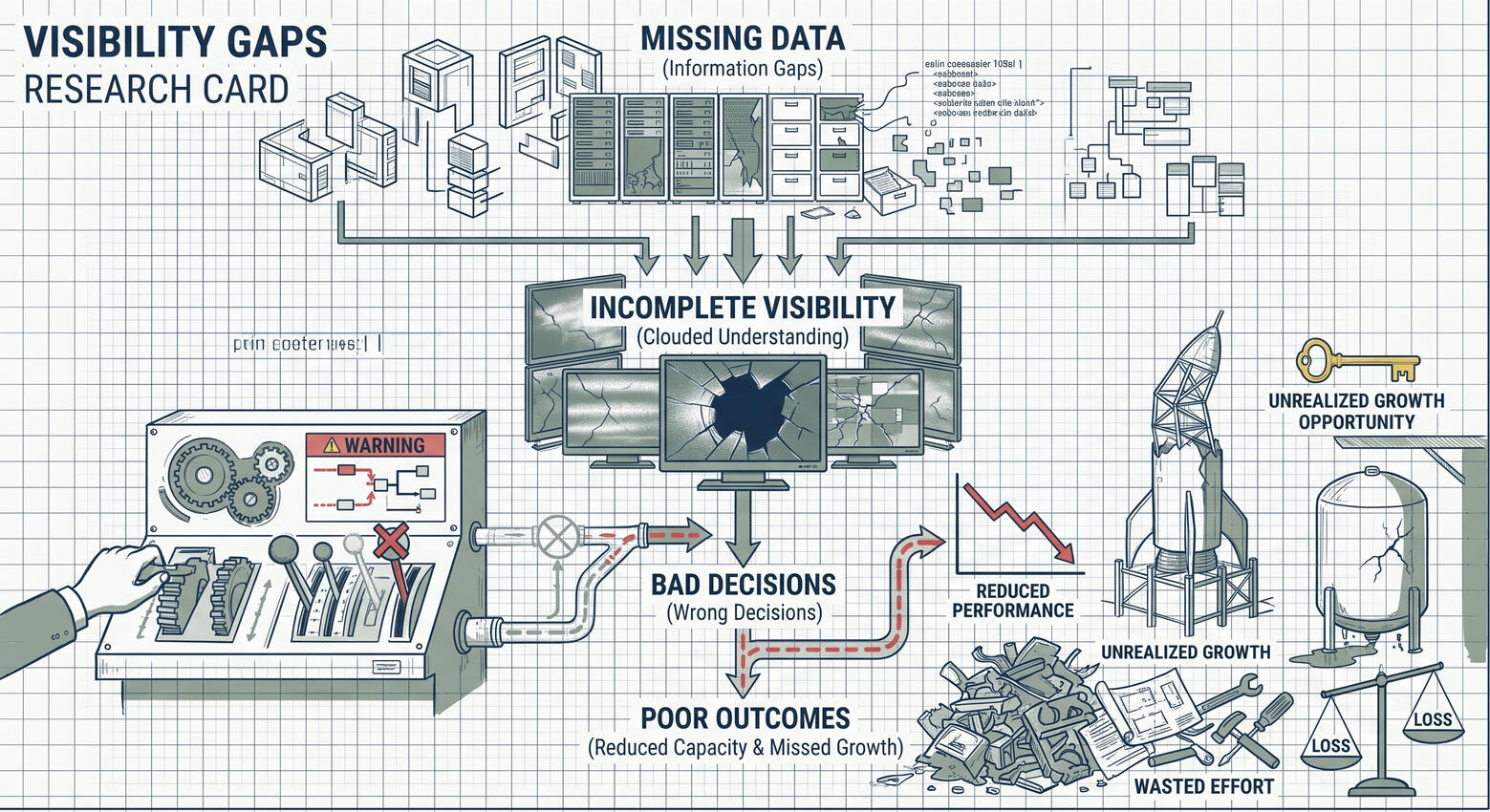
Visibility Gaps
Decisions are only as reliable as the information supporting them. Missing, incomplete, or disconnected data often causes organizations to prioritize the wrong improvements while overlooking the actual constraint.
Poor visibility frequently produces poor decisions.
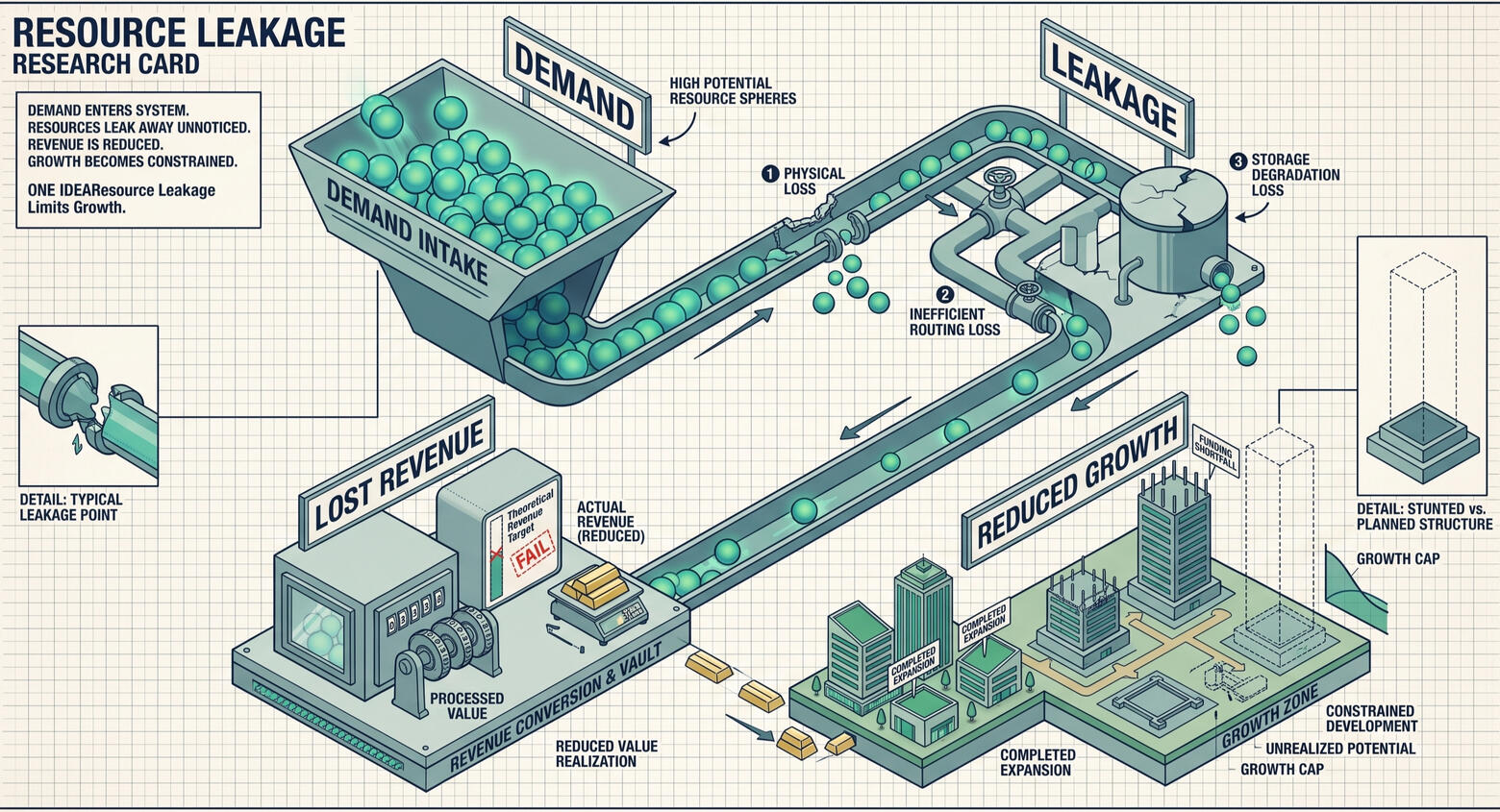
Resource Leakage
Revenue, opportunities, and operational capacity are often lost through unnoticed bottlenecks. Without investigation, these losses become accepted as normal operating conditions rather than identifiable problems.
Most organizations lose more through leakage than they realize.
Symptoms attract attention.
Constraints create impact.
Effective diagnostics focus on identifying the hidden issues that influence performance, profitability, and growth across the organization.
THE INVESTIGATION FRAMEWORK
Observation. Evidence. Analysis. Clarity.
Assumptions create uncertainty. Investigation creates clarity. Our diagnostic framework is designed to move beyond symptoms and identify the constraints most responsible for limiting performance, efficiency, and growth. Every finding is supported by evidence, measured impact, and practical recommendations.
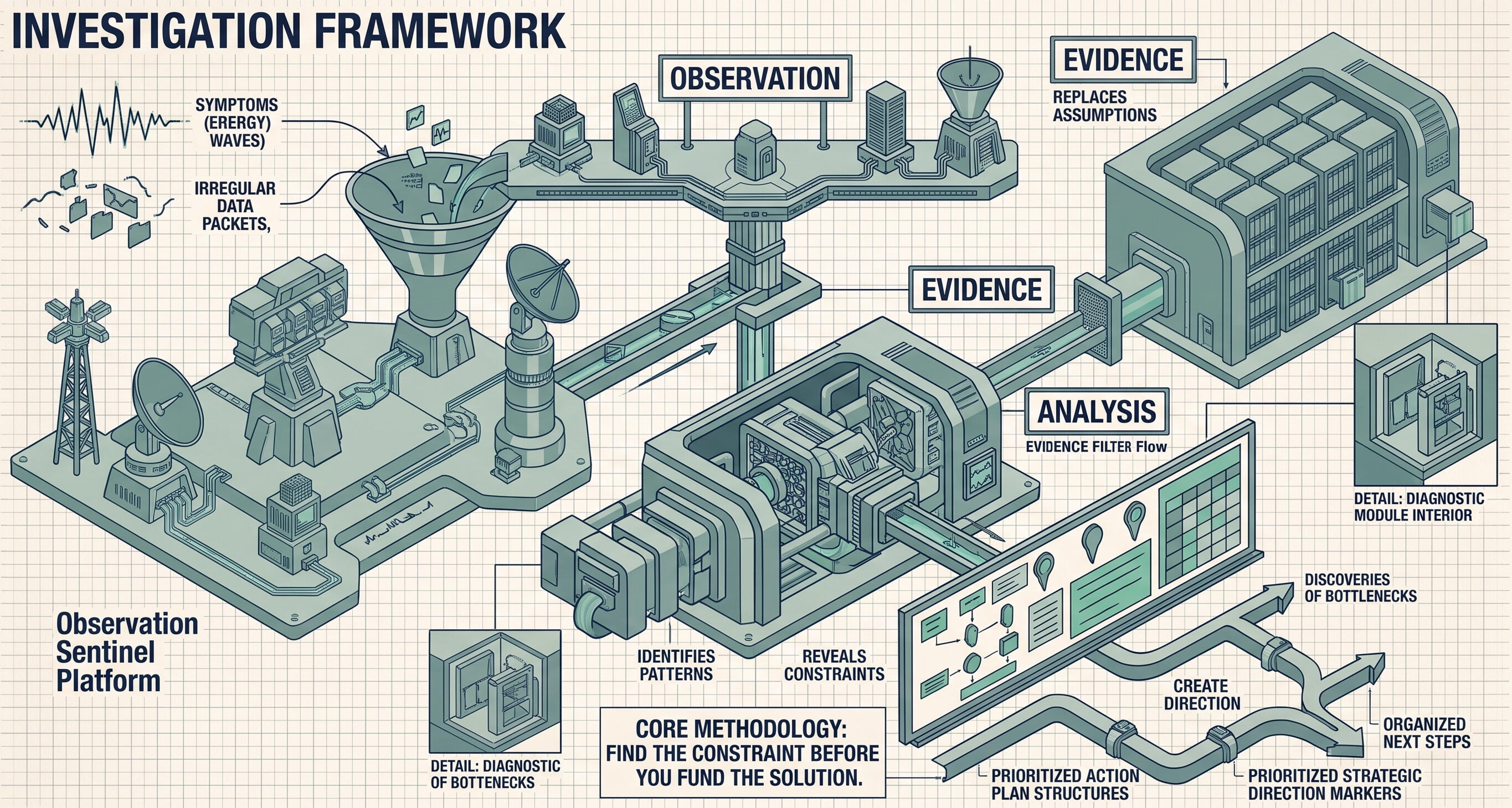
OBSERVATION
Every investigation begins by identifying visible symptoms. Declining conversions, delayed workflows, performance issues, communication breakdowns, and inconsistent results often indicate deeper operational constraints.
EVIDENCE
Information is collected from systems, processes, workflows, reporting tools, and digital infrastructure to establish an objective view of current conditions. The goal is to replace assumptions with measurable facts.
ANALYSIS
Evidence is evaluated to identify patterns, inefficiencies, bottlenecks, points of friction, and hidden constraints. Rather than treating symptoms individually, the investigation focuses on uncovering root causes.
RECOMMENDATIONS
Every investigation concludes with practical recommendations prioritized by likely impact. The objective is not simply to identify problems, but to create a clear path forward based on evidence.
FINDINGS
Results are documented in clear language that identifies what was discovered, why it matters, and how it impacts performance, operational efficiency, customer experience, or growth.
Effective diagnostics do not begin with a solution. They begin with a question. By following a structured investigation process, businesses gain the clarity required to invest time, effort, and capital where it will produce the greatest measurable impact.
Want to see how the diagnostic works? → View the process & FAQs
DIAGNOSTIC CATEGORIES
Constraints Can Exist Across The Entire Business.
Business problems rarely exist in isolation. A slowing website may actually be a workflow issue. Poor conversion rates may be a visibility problem. Revenue leakage may stem from operational friction rather than marketing performance. Our investigations are designed to identify constraints wherever they exist.
DIGITAL INFRASTRUCTURE
Technical Performance & Reliability
Evaluate websites, platform performance, technical debt, tracking systems, mobile usability, page speed, and digital infrastructure components that influence customer experience and business performance.
OPERATIONAL SYSTEMS
Process Efficiency & Workflow Analysis
Investigate scheduling processes, intake systems, administrative workflows, communication breakdowns, handoff delays, and operational friction reducing capacity throughout the organization.
BUSINESS VISIBILITY
Reporting, Analytics & Decision Support
Review reporting systems, measurement frameworks, data quality, tracking accuracy, and operational visibility gaps that may be limiting planning, forecasting, and decision-making processes.
GROWTH CONSTRAINTS
Revenue Leakage & Opportunity Loss
Identify lead leakage, conversion bottlenecks, customer journey friction, delayed follow-up processes, and hidden factors preventing demand from becoming measurable business results.
The objective is not to confirm assumptions. It is to identify the constraint creating the greatest measurable impact. Once that constraint is understood, decisions become clearer, investments become more effective, and improvement efforts become easier to prioritize.
FINDINGS & RECOMMENDATIONS
Investigation Without Direction Creates More Uncertainty.
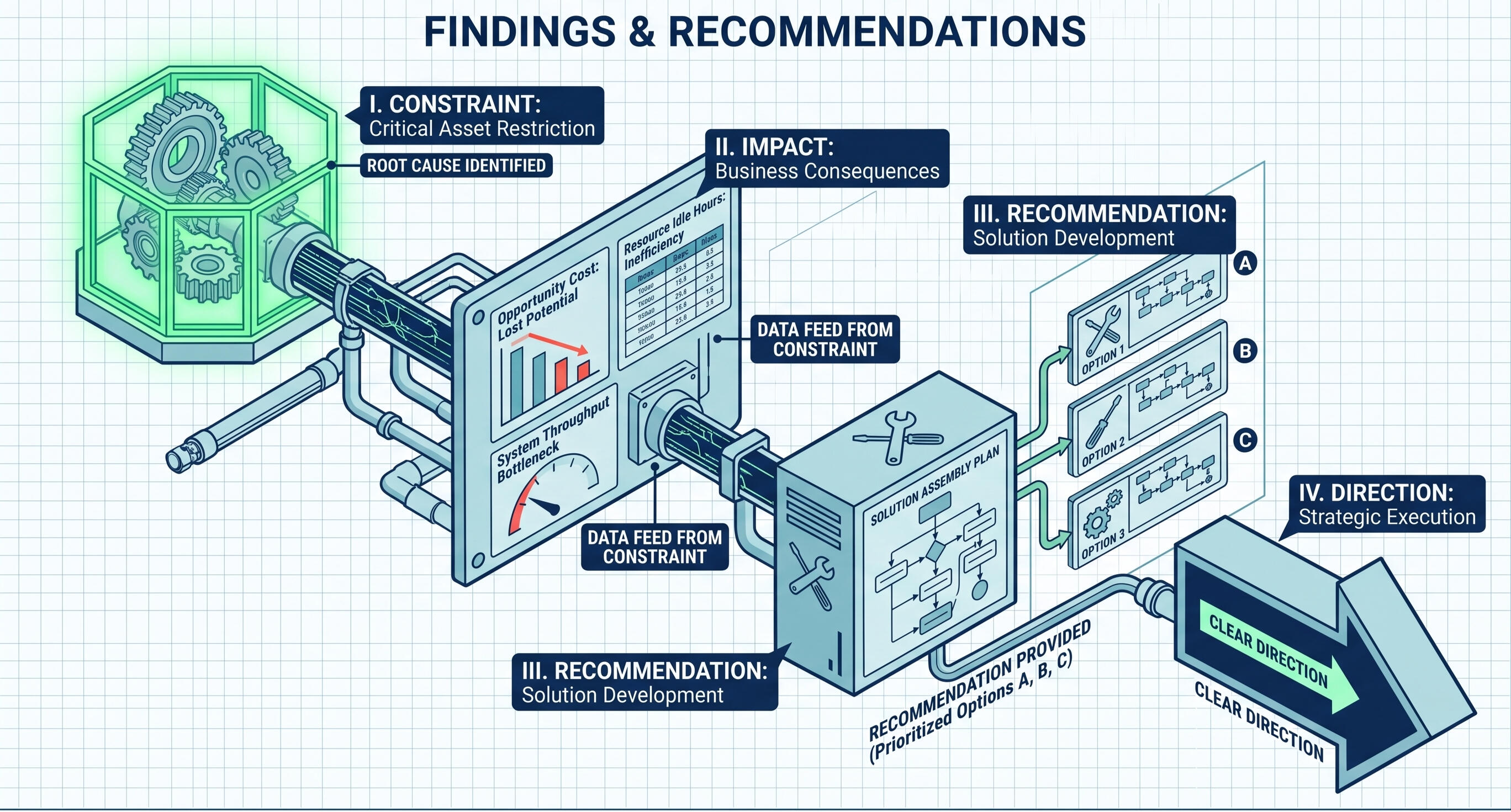
The purpose of an investigation is not simply to identify problems. Effective diagnostics produce actionable findings, measurable impact assessments, and practical recommendations that help business leaders make informed decisions. Every investigation concludes with a clear understanding of what was discovered, why it matters, and what should happen next.
CONSTRAINT IDENTIFIED
The investigation isolates the specific technical, operational, workflow, or visibility constraint most responsible for limiting performance. Rather than producing a list of unrelated observations, the objective is to determine which issue is having the greatest measurable impact.
IMPACT MEASURED
Every finding is evaluated within the context of business performance. Whether the constraint affects efficiency, customer experience, response times, operational capacity, conversion rates, or revenue opportunities, the impact is clearly defined.
RECOMMENDATION PROVIDED
Recommendations are supported by evidence rather than assumptions. Corrective actions are prioritized based on likely impact, implementation complexity, and the expected value created by resolving the identified constraint.
NEXT STEP DEFINED
A successful investigation creates a practical path forward. Whether the next step involves operational improvements, infrastructure upgrades, process refinement, strategic planning, or growth initiatives, the decision becomes easier because it is supported by evidence.
The goal of diagnostics is clarity. Once the constraint is understood and its impact is measured, solutions become easier to evaluate, investments become easier to prioritize, and confidence replaces uncertainty.
Understand the Process. Get the Answers..
DIAGNOSTIC CONSULTATION
Request A Diagnostic Review.
Every investigation begins by understanding the symptoms. Whether you're experiencing declining performance, operational inefficiencies, inconsistent growth, workflow bottlenecks, reporting gaps, or technical issues, the first objective is to establish clarity. The diagnostic review helps determine where investigation should begin and which constraints deserve the highest priority.
01. Discovery
Review current challenges, observations, performance concerns, and business objectives.
02. Investigation Scope
Determine which systems, workflows, processes, or operational areas require deeper analysis.
03. Diagnostic Review
Select the most appropriate investigation methodology based on the symptoms and available evidence.
04. Findings & Direction
Establish the next step, whether that involves additional investigation, operational improvements, infrastructure changes, or strategic recommendations.
COMMON QUESTIONS
Frequently Asked Questions
What exactly is a diagnostic review?
A diagnostic review is the first step in determining where investigation should begin. It establishes context, identifies symptoms, and helps determine which systems, processes, or operational areas require further analysis.
Do I need to know what the problem is?
No. Most organizations recognize symptoms long before they understand the underlying constraint. The purpose of diagnostics is to move from assumptions to evidence.
What types of issues can be investigated?
Investigations may focus on digital infrastructure, operational systems, reporting accuracy, workflow efficiency, customer experience, lead management, revenue leakage, or growth constraints.
What happens after the investigation is complete?
Every investigation concludes with findings, documented evidence, measurable impact assessments, and practical recommendations. The objective is to create clarity and establish a path forward.
Will I be required to purchase additional services?
No. The purpose of diagnostics is to identify constraints, not force predetermined solutions. Recommendations are based on evidence and may involve operational changes, infrastructure improvements, strategic planning, or no action at all.
Interested in support beyond the diagnostic? →
Explore Foundational Business Solutions
The quality of a solution depends on the quality of the diagnosis. Before committing resources to change, make sure you understand the constraint creating the problem.
WHY DIAGNOSTICS MATTER
Diagnostics Over Decoration.
Most organizations do not suffer from a lack of solutions. They suffer from a lack of clarity. New software, redesigned websites, advertising campaigns, automation platforms, and operational changes are frequently implemented before the underlying constraint is fully understood. Effective diagnostics help ensure that effort, time, and capital are directed toward the problem that actually matters.
CONSTRAINT IDENTIFIED
The investigation isolates the specific technical, operational, workflow, or visibility constraint most responsible for limiting performance. Rather than producing a list of unrelated observations, the objective is to determine which issue is having the greatest measurable impact.
IMPACT MEASURED
Every finding is evaluated within the context of business performance. Whether the constraint affects efficiency, customer experience, response times, operational capacity, conversion rates, or revenue opportunities, the impact is clearly defined.
REACTION WITHOUT DIAGNOSIS
Acting without evidence often leads to solutions that address symptoms rather than causes. Teams spend valuable resources implementing changes while the underlying constraint continues to limit performance. The result is frustration, wasted effort, and inconsistent outcomes.
EVIDENCE BEFORE ACTION
Diagnostics establish clarity before decisions are made. By identifying the specific constraint creating the greatest measurable impact, organizations gain confidence that future investments, improvements, and strategic initiatives are aligned with reality rather than assumptions.
Most businesses don't have a solution problem. They have a diagnosis problem.
The strongest decisions are rarely based on instinct alone. They are supported by evidence, investigation, and a clear understanding of how systems, processes, infrastructure, and people interact. Diagnostics help transform uncertainty into confidence by replacing assumptions with measurable findings.
Before investing in a solution, make sure you understand the constraint. Accurate diagnosis reduces risk, improves decision-making, and creates the foundation for meaningful progress.
REQUEST A DIAGNOSTIC REVIEW
Start With Evidence.
If something feels wrong but the cause remains unclear, a diagnostic review is the first step toward understanding the constraint. Share your observations, concerns, and objectives below, and we'll determine the most appropriate investigation path.
EVIDENCE BEFORE ACTION
Find The Constraint Before You Fund The Solution.
Most organizations don't struggle because they lack solutions. They struggle because they invest in solutions before fully understanding the problem. Diagnostics help uncover the constraints limiting progress, allowing time, effort, and capital to be directed where they will create the greatest measurable impact.
Clarity reduces risk. Evidence improves decisions. Investigation creates direction.
The strongest decisions are rarely based on assumption. They are built on evidence.
©2026 Foundational Business Services & Green Guild Holdings LLC. All rights reserved.